Steamed couscous: separate the grain before seeking a definitive recipe
A Maghrebi-context couscous guide that distinguishes hand-rolled grain from instant product, then teaches a flexible vegetable steaming method with clear allergen and steam-safety notes.
A modern packet can reduce couscous to boiling water and five minutes. The technique behind the name is slower and more tactile: semolina is formed into granules, worked, steamed and separated so each grain swells without becoming a mass. Instant couscous is not ‘wrong’; it is processed differently and should follow its own label rather than being treated like raw grain.
UNESCO inscribed couscous knowledge and practice jointly for Algeria, Mauritania, Morocco and Tunisia in 2020. This guide keeps that breadth visible. It does not hand every version to one nation or turn one vegetable mix into law. The Yummy Food method below is a texture exercise inspired by Maghrebi steaming logic, not a definitive heritage recipe.
Shared heritage, many tables
UNESCO describes a chain from cereal cultivation and semolina to hand rolling, steaming and cooking. Accompaniments vary with region, season and occasion, while skill moves through observation and practice. The documented fact is a shared technique and social meaning; each household still has its own ratios, sequence and memory.
Morocco’s official tourism office places couscous in Amazigh tradition and notes Moroccan Friday service with vegetables, meat, fish, chicken or even sweet versions. Tunisia’s tourism office records other regional forms, from fish to barley and dates. These are evidence of range, not a border around what may be cooked.
Read the packet before starting the steam
Shop couscous is not one product. Some is uncooked semolina grain intended for repeated steaming; some is pre-cooked and dried for quick hydration. If the maker specifies five minutes or a water ratio, follow it. Long steaming can turn a quick product fragile or pasty rather than more authentic.
Our workshop uses medium, non-instant couscous explicitly labelled for steaming. Water is sprinkled in stages, never dumped at once. A little oil and fork-fluffing separate the surface; a short rest lets moisture reach the centre. The number of rounds is not a contest: stop when the grain is tender and distinct.
Broth supports texture; it should not drown it
A traditional couscoussier lets the broth’s aroma rise through the grain, but steam does not replace measured moistening. Onion, tomato and roots start first; courgette and cooked chickpeas join later so they hold their shape. Cumin, turmeric and pepper are our restrained editorial blend, not a universal Maghrebi formula.
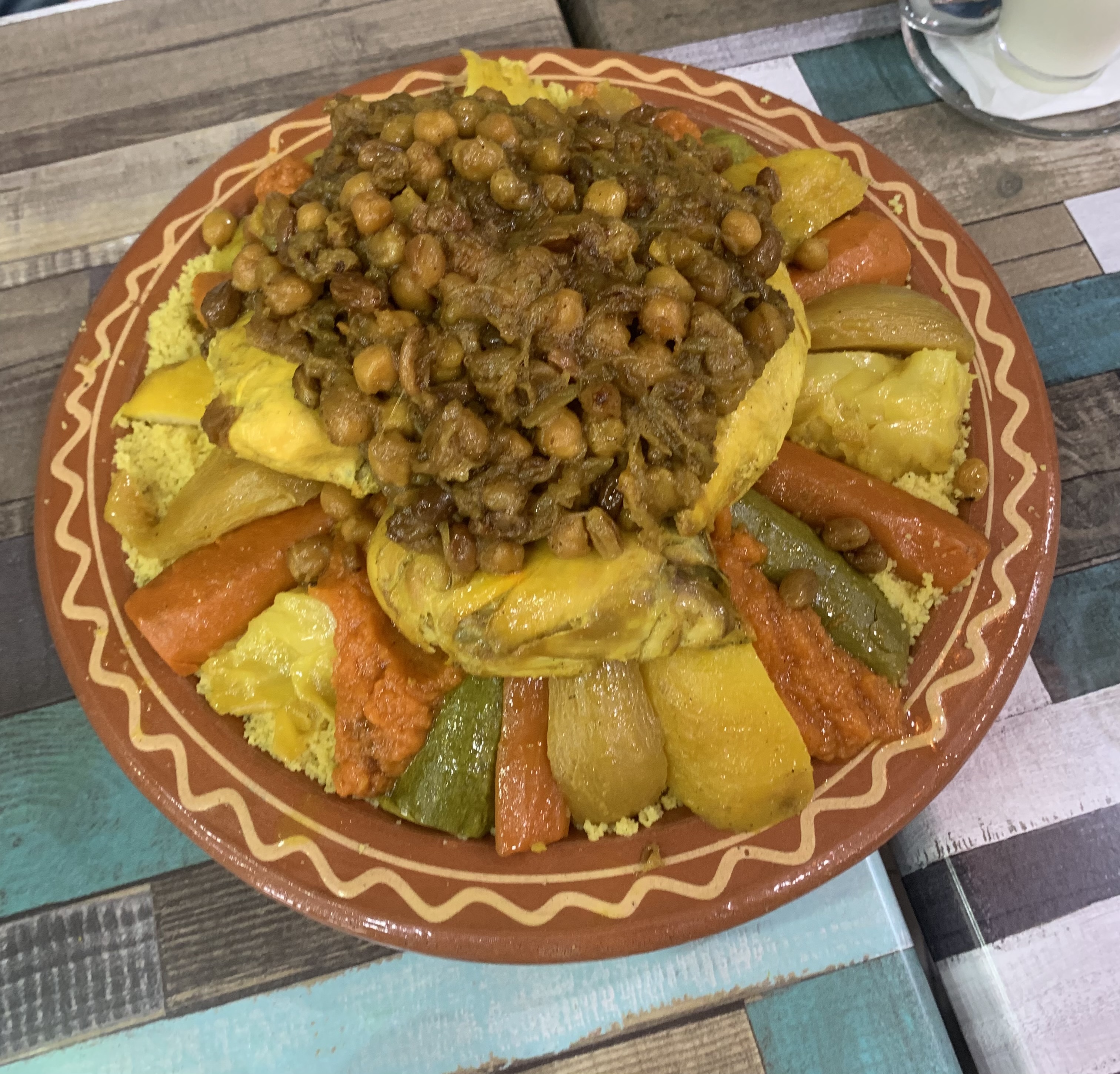
At the table, arrange vegetables over the grain and spoon broth gradually around the edge. Diners can keep the grain loose or soften their own portion. The accompanying photograph documents a Moroccan couscous served in Tétouan on a Friday; it is contextual and does not claim to show our vegetable test recipe.
Steam rewards an orderly setup
Use a stable, manufacturer-compatible pot and steamer on a burner suited to its base. Do not seal steam paths with improvised cloth or dough, and never lift a lid towards your face. Move grain to a stable tray with dry mitts, wait briefly, then use a fork. Do not copy experienced hand-working while the semolina is still hot.
Cool leftover grain and broth in shallow containers within two hours, or one hour above 32°C. USDA guidance supports 3–4 refrigerated days and reheating leftovers to 74°C. Those are modern household safety controls, not part of the heritage definition.
Vegetable couscous with two steamings and an optional third
A Yummy Food texture workshop. Use non-instant couscous labelled for steaming; otherwise follow the packet and do not use these timings.
- Time
- 90 minutes
- Yield
- Serves 6
- Level
- Moderate
Ingredients
- 400g medium non-instant couscous made from durum-wheat semolina and labelled for steaming
- 300–350ml cool drinking water, added gradually
- 2 tbsp olive oil, plus a little to serve
- 1 tsp salt, divided
- 1 large onion, chopped, and 400g grated or chopped tomato
- 3 carrots and 2 turnips, cut into similar large pieces
- 2 medium courgettes, cut into large pieces
- 240g cooked drained chickpeas
- 1.5 litres water or unsalted vegetable stock, label checked
- 1 tsp cumin, 1/2 tsp turmeric and black pepper
- Parsley or coriander to serve, optional
Method
- 01
Set a couscoussier or compatible steamer on a stable surface according to its instructions. Keep the boiling liquid below the grain basket.
- 02
Warm 1 tbsp oil and soften the onion. Add tomato, cumin, turmeric and pepper, then carrots, turnips and stock. Simmer for 20 minutes.
- 03
Spread couscous on a wide tray. Mix in 1 tbsp oil, sprinkle over 100ml water in stages and turn with a fork. Rest 10 minutes and separate clumps without pressing.
- 04
Place grain loosely in the basket. Once steam appears at the surface, time 20 minutes. Lift the basket with dry mitts and keep face and hands clear.
- 05
Tip onto the tray and wait 5 minutes. Fluff with a fork; gradually sprinkle over 100–125ml water and half the salt. Add courgettes and chickpeas to the broth.
- 06
Steam another 20 minutes. Cool and taste one grain. If tender and separate, stop; if the centre is dry, add only part of the remaining water, rest 10 minutes and steam 10–15 minutes more.
- 07
Season broth and grain separately. Mound couscous, arrange vegetables and chickpeas, and spoon a little broth around the edge; serve the rest alongside.
- 08
Divide leftovers into shallow containers within two hours, or one hour above 32°C. Refrigerate for no more than 3–4 days and reheat to 74°C.
Sensible alternatives
- For quick couscous, use the packet’s liquid and timing, then serve with the same broth. It is convenient but will not mimic repeated steaming.
- Pumpkin or sweet potato can replace turnip, and parsley can replace coriander. This is a declared seasonal change, not a claim about one regional recipe.
- Without a couscoussier, use only a metal insert the manufacturer says fits the pot and fine grains; do not improvise an unstable joint.
Allergen and dietary note
- Traditional couscous is durum-wheat semolina and contains wheat and gluten. Read the full ingredient list every time.
- Packaged stock and spice blends may contain wheat, milk, celery or sesame; the front name is not enough.
- A clearly labelled gluten-free grain alternative may accompany the broth, but it is not traditional semolina couscous and needs its own directions.
Quick safety check
- Keep the steamer stable and within the maker’s fill limits; turn handles in and keep children away.
- Lift lids away from the face and use dry mitts; steam can burn before it looks dramatic.
- Do not touch hot grain by hand. Wait and use a fork until it is safe.
- Cool leftovers promptly in shallow containers, use within 3–4 days and reheat to 74°C.
Sources and verification
Yummy Food reviewed UNESCO, official Moroccan and Tunisian tourism sources, USDA, FDA and the image licence record on 20 August 2026. Shared history, storage and allergen rules are attributed facts; quantities, vegetables and steaming rounds are declared editorial test-kitchen choices.
- Knowledge, know-how and practices pertaining to the production and consumption of couscousUNESCO Intangible Cultural Heritage ↗
- Food & Drinks — CouscousMoroccan National Tourist Office ↗
- Le Kef — regional barley and date couscousDiscover Tunisia, official tourism portal ↗
- Leftovers and Food SafetyUSDA Food Safety and Inspection Service ↗
- Have Food Allergies? Read the LabelU.S. Food and Drug Administration ↗
- Couscous (74111) — image and licence recordWikimedia Commons ↗
Two tools directly tied to the technique
General search links with no price, availability or paid-ranking claims.
For cooks who will repeat the method; check stability, capacity and hob instructions.
Search Amazon.sa ↗02Wide stainless mixing trayFor spreading, moistening and cooling grain before fluffing; any stable food-safe tray works.
Search Amazon.sa ↗As an Amazon Associate I earn from qualifying purchases.