Matcha at Home: Two Grams, 70 Millilitres and a Wrist That Does the Work
A culturally grounded guide to understanding matcha and whisking one smooth bowl at home using a verified ratio and temperature, with practical tool alternatives and no health hype.
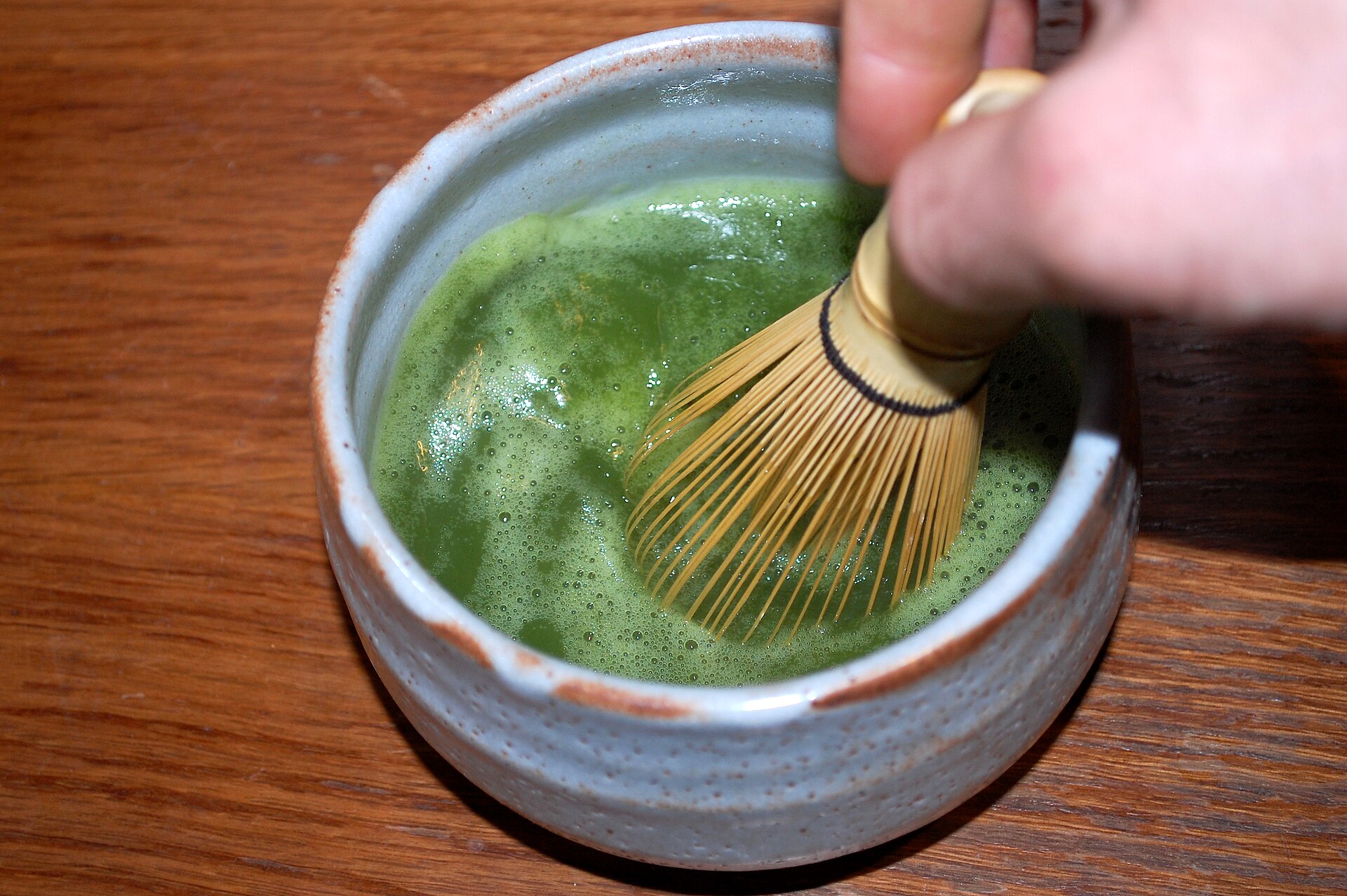
Matcha can look like a two-step drink: green powder plus water. A balanced bowl begins earlier—with knowing that matcha is not a label for every powdered green tea, then sifting the powder, controlling the water temperature and moving the whisk without grinding its tips into the bowl.
This is a guide to an everyday bowl at home, not a lesson in chanoyu and not a shortcut to the philosophy of Japanese tea ceremony. We use Kyoto Prefecture Tea Industry Research Institute guidance as a practical benchmark, clearly separating it from our editorial tasting notes and from modern café drinks.
What makes matcha matcha?
Japan’s Ministry of Agriculture, Forestry and Fisheries explains that tencha leaves are shade-grown, steamed and dried without rolling. Stems and veins are removed before the leaf is ground into fine powder. Colour or the phrase ‘powdered green tea’ alone therefore cannot establish that a product is matcha.
Uji matcha belongs to a documented tea history in southern Kyoto, but matcha is also produced elsewhere in Japan. We name Uji as context, not as a claim that every good matcha must come from one place. Read origin, tea type, packing date and storage instructions rather than relying on ‘ceremonial’ as a universal grade.
An official benchmark, not an exam
Kyoto Prefecture advises sifting about 2g matcha, then using 70ml water that has been boiled and cooled to 70–80°C. A little water goes in first to dissolve lumps; the remainder follows, and the wrist moves briskly back and forth before the surface is finished gently.
That ratio is concentrated compared with a mug of tea, deliberately so. If you prefer a lighter drink, taste the bowl first and add a little hot water. Filling a large mug at the outset makes texture and balance harder to judge. Products, water and preferences naturally differ.
Why sift and warm the bowl?
Matcha is whole powdered leaf suspended in water, not leaves removed after steeping. Moisture and pressure create tiny clumps that aggressive whisking may not solve. Sifting breaks them before water arrives; warming the bowl and whisk, then drying the bowl, limits a sudden temperature drop and softens the bamboo tines.
These steps serve texture rather than theatre. Kyoto Prefecture explicitly says a wide café-au-lait bowl can replace a dedicated chawan and a light teaspoon can replace a chashaku. An electric frother produces foam but a different movement and mouthfeel, so we do not call it an identical substitute for chasen.
Fine foam, not a mountain of bubbles
Move from the wrist in a short forward–back path, keeping the tips in the liquid without scraping the base. Once the foam is fine, lift the whisk slightly and settle any large bubbles. Foam volume is not a quality score by itself; the goal is an even suspension, smooth mouthfeel and legible flavour.
In Riyadh or Jeddah, do not leave the powder open beside a steaming kettle. Reseal it immediately and follow the pack’s storage directions, away from heat, moisture and strong odours. We make no detox or treatment claims: matcha is tea and naturally contains caffeine, with amounts varying by product and serving.
One everyday bowl of matcha
Start with Kyoto Prefecture’s measure: 2g matcha and 70ml water at 70–80°C. Adjust after tasting, not before learning the ratio.
- Time
- 7 minutes
- Yield
- 1 bowl
- Level
- Easy with a little practice
Ingredients and tools
- 2g matcha (about one light teaspoon)
- 70ml drinking water, boiled then cooled to 70–80°C
- A stable, wide bowl
- A clean, dry fine sieve
- Bamboo chasen; or a small hand whisk with a different expected texture
- Kitchen scale or measuring spoon; thermometer optional
Method
- 01
Boil the water. Pour a little into the bowl to warm it and gently wet the chasen tips; discard, then dry the bowl thoroughly.
- 02
Sift 2g matcha directly into the bowl. Ease clumps through the sieve without putting fingers near wet or hot powder.
- 03
Cool the water to 70–80°C. Add a small portion and stir slowly into a fluid paste with no dry pockets.
- 04
Add the rest of the 70ml and whisk briskly from the wrist in a short forward–back motion. Do not grind the whisk into the base or crush the tines.
- 05
When bubbles are fine, skim the surface gently and lift the whisk straight out. Taste at once while warm.
- 06
Rinse the chasen with clean water and air-dry it as its maker directs. Wipe the pack rim and keep the powder away from kettle steam.
Thoughtful alternatives
- No matcha bowl? Use a stable, wide breakfast or café-au-lait bowl; Kyoto Prefecture explicitly permits household alternatives.
- No chashaku? One light teaspoon is about 2g, but a scale is more repeatable because powders pack differently.
- For a latte, make a smooth matcha paste first, then add hot, non-boiling milk. This is a modern café drink, not the same as the plain bowl.
Allergen and dietary note
- Pure matcha is usually a single ingredient, but latte mixes may contain milk, soy, flavourings or sweeteners. Read the full label.
- For a guest with a severe allergy, separate dairy and plant-milk tools and check the pack for cross-contact information.
Quick safety check
- Water at 70–80°C can scald. Stabilise the bowl and pour away from children and counter edges.
- Keep the sieve and bowl dry; seal powder away from steam and humidity.
- Follow the package storage and use-by instructions; discard powder with off odour, visible moisture or mould.
- This article makes no treatment claims and gives no personalised caffeine advice.
Sources and verification
Yummy Food reviewed the official sources and image licence page on 13 August 2026. Production and preparation figures come from their publishers; tasting advice and household alternatives are identified editorial choices.
Two tools directly tied to the technique
General search links without price, availability or paid-ranking claims.
For fine hand whisking; review maker care and tine details before choosing.
Search Amazon.sa ↗02Small fine-mesh sifterBreaks up powder before water; any clean, dry fine sieve can do the job.
Search Amazon.sa ↗As an Amazon Associate I earn from qualifying purchases.