Panzanella: How Yesterday’s Bread and Tomatoes Become a Balanced Summer Salad
A culturally grounded Tuscan bread-salad guide: family variation, careful soaking and acidity, plus a flexible recipe and clear raw-produce safety.
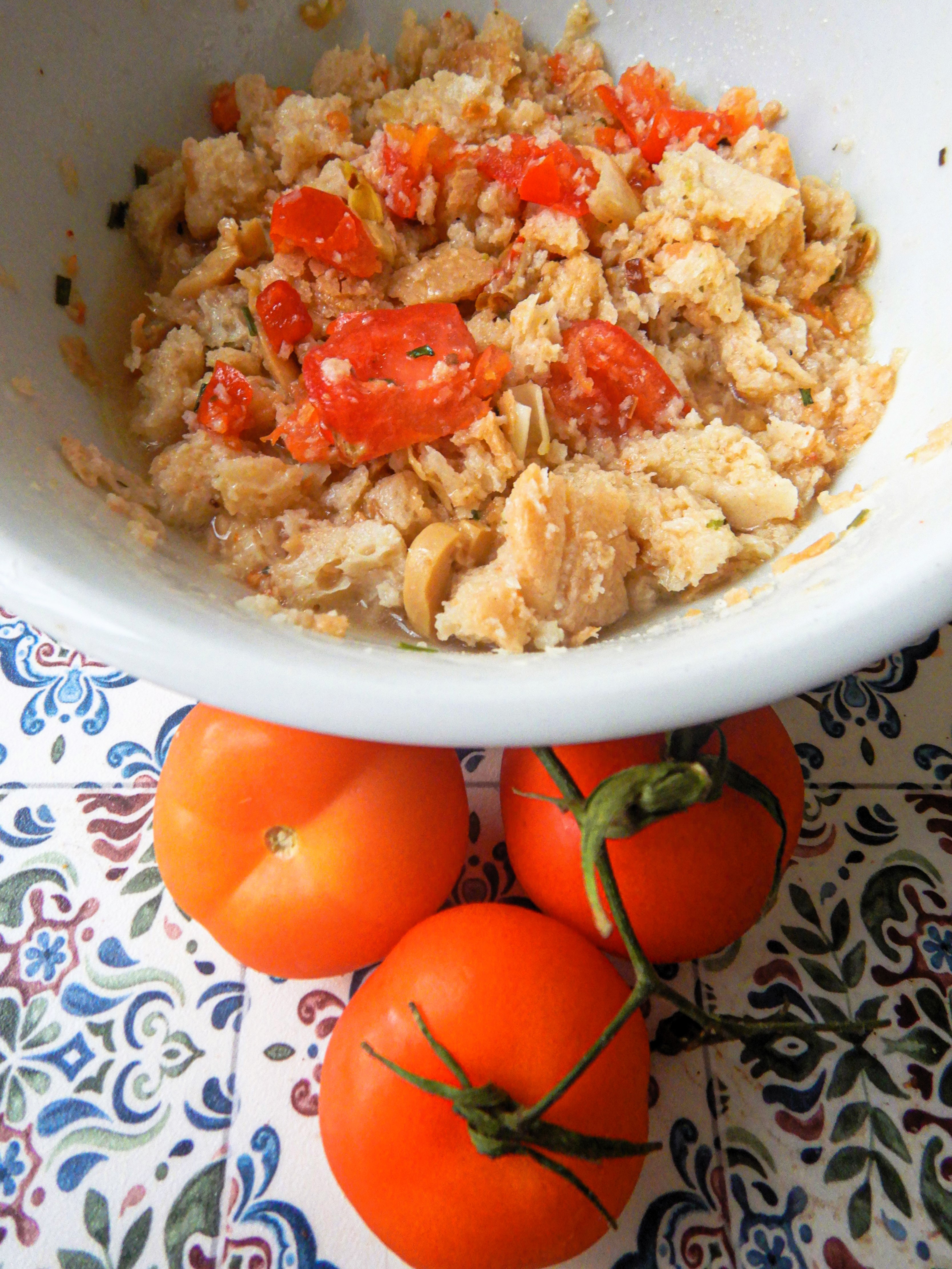
Stale bread can look like the end of a meal; panzanella makes it the centre. Ripe tomatoes, bread that keeps a little structure, basil, olive oil and vinegar become an exercise in water, time and acidity—not wet crumbs and not merely a green salad with croutons.
Visit Tuscany’s official portal describes panzanella as a Tuscan dish of rural origin and explicitly says household versions are endless. Our recipe is therefore one Tuscan-inspired home interpretation, not a definitive formula. We retain cucumber and onion from the official recipe while adapting the bread choice to what Saudi kitchens can realistically find.
A family dish, not a closed template
The official Tuscan source centres stale bread, ripe tomatoes and basil, then notes that cucumber, onion and even canned tuna may appear according to family and pantry. That documented flexibility matters: a living dish should not become a narrow authenticity test.
Our preference for a salad in which bread absorbs juice without hiding the tomatoes is editorial judgment from the Yummy Food kitchen. Some families prefer a softer crumble, others more distinct pieces. Variation is part of the story, not an error to fix.
Give the bread only the water it needs
Traditional Tuscan bread differs in salt, crust and moisture from the Arab flatbreads and country loaves available locally. Instead of prescribing a blind soaking time, moisten gradually until the centre yields while edges retain shape, then squeeze gently. A fresher loaf needs less liquid than one that is several days old.
Salting the tomatoes first creates juice that can soften the bread before plain water is added. That is our practical editorial technique, not a historical rule. If bread collapses on contact, fold it in for the final ten minutes; if it remains hard, add tomato juice or water one spoonful at a time.
Acid and chilling shape the texture
Vinegar brightens tomato and olive oil coats bread and vegetables, but start modestly because vinegars and tomatoes vary. Toss, chill for twenty minutes and taste again. Cold temperatures mute our perception of salt and acidity.
Use a clearly labelled red-wine vinegar suitable for your household, or lemon juice as an openly stated local alternative. Lemon tastes different and is not presented as equivalent. Truly stale bread needs no toasting; toast only when you want a firmer texture.
Simple care for raw produce
The US FDA advises washing produce under running water—not soap or detergent—alongside clean hands and tools, and separating ready-to-eat vegetables from raw meat. Washing reduces bacteria but does not eliminate it, so start with sound produce and keep it cold.
Refrigerate the finished salad and do not leave it out for more than two hours, or one hour when the air is above 32°C/90°F. That is general safety guidance verified on 11 August 2026, not part of the dish’s heritage. For the best texture, eat it the same day and do not refreeze it.
A flexible summer panzanella for four
Begin with tomato juice, adding water only if the bread needs it; texture matters more than a fixed clock.
- Time
- 35 minutes
- Yield
- 4 side servings
- Level
- Easy
Ingredients
- 300 g stale country bread or thick Arab bread, cut into pieces
- 600 g ripe tomatoes, washed and chopped
- 1 medium cucumber, washed and chopped
- ½ red onion, finely sliced
- 1 packed cup basil leaves, washed and dried
- 4 tbsp extra-virgin olive oil
- 1–2 tbsp suitable red-wine vinegar or lemon juice
- ½ tsp salt, then to taste
- Black pepper and cold water as needed
Method
- 01
Wash hands and produce under running water, dry the vegetables and clean the knife and board.
- 02
Toss tomatoes with half the salt and rest 10 minutes to draw out juice. Soak onion in cold water for 10 minutes, then drain.
- 03
Place bread in a bowl and spoon tomato juice over it gradually. Add cold water only one tablespoon at a time if its centre remains hard.
- 04
Add tomatoes, cucumber, onion and basil. Fold with oil and one tablespoon vinegar or lemon without crushing the bread.
- 05
Chill for 20 minutes. Taste and adjust salt and acidity; add the remaining acid only if needed.
- 06
Serve lightly chilled. Return leftovers promptly to a covered container in a refrigerator at 4°C/40°F or below.
Sensible substitutions
- Thick Arab bread or a country loaf works, but begin with less juice because it may soften faster than Tuscan bread.
- Lemon is an accessible alternative to vinegar with a different flavour; the result is not identical.
- Omit cucumber or onion according to season and preference; the Tuscan source itself documents variation.
Allergy note
- Ordinary bread contains wheat and gluten; commercial loaves may also contain sesame, milk or soy. Read the full label.
- For severe allergies, use reliably suitable bread and prevent cross-contact from boards and toasters.
Quick safety checklist
- Wash produce under running water, never with soap.
- Keep ready-to-eat produce tools separate from raw meat.
- Refrigerate within two hours, or one hour above 32°C/90°F.
- Store covered at 4°C/40°F or below and ideally eat on the day it is made.
Sources and verification
Yummy Food reviewed the official sources and image licence page on 11 August 2026. Visit Tuscany and FDA facts are kept distinct from our editorial recipe choices.
Two tools directly related to preparation
Practical choices without price or availability claims.
Cuts firm stale bread into even pieces; always work on a stable board.
Search Amazon.sa ↗02Lidded glass containerFor chilling the salad and covering leftovers; any clean sealed container works.
Search Amazon.sa ↗As an Amazon Associate I earn from qualifying purchases.